
WELCOME BONUS 300%
UP TO €2000 + 100
FREE SPINS
UP TO €2000 + 100
FREE SPINS
Home → Roulette
Roulette at Frank Casino
Check Table Limit Before First Progression Starts
The maximum bet on Live Lightning Roulette is 5,000 EUR, a limit set by Evolution. This figure allows for substantial wagers, particularly for players employing betting progressions. In contrast, a bet of 0.10 EUR on Mega Fire Blaze Roulette Live, for example, represents the lower end of the betting spectrum. Players aiming for high stakes will find the 5,000 EUR limit on Lightning Roulette to be a significant factor in their strategy.
When considering progressive betting strategies, understanding the table limits is paramount. For instance, a player starting with a 1 EUR bet and doubling it with each loss on a European Roulette table (RTP 97.30%) would need to be mindful of the 5,000 EUR maximum. If a losing streak reaches 20 consecutive bets, the required next bet would exceed this limit, halting the progression.
The 5,000 EUR table limit on Live Lightning Roulette significantly influences strategy for players using progression systems. Without this high limit, such strategies could be prematurely ended. This contrasts with the 35:1 payout for a Straight bet, which, while substantial, is fixed and not directly affected by table limits in the same way as progressive bets.
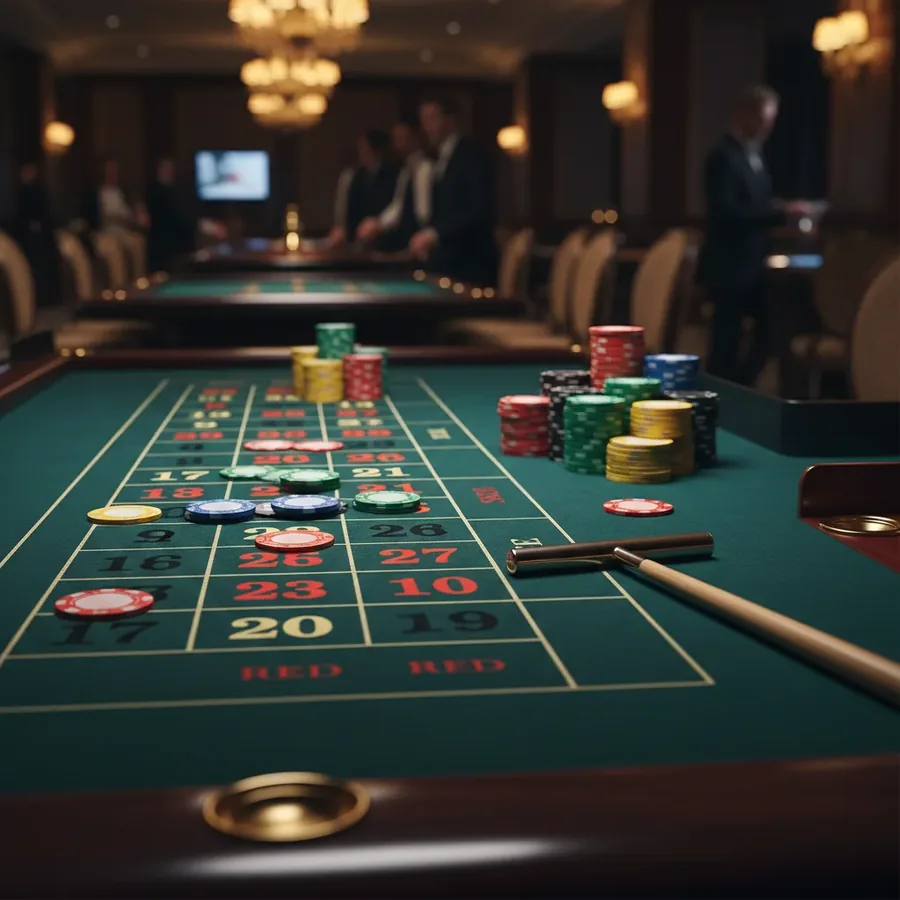
Small Budget: Why Straight 35:1 Empties Quickly
A Straight bet on European Roulette offers a payout of 35:1, meaning a 1 EUR stake returns 36 EUR. However, this attractive payout is based on covering a single number out of 37 sectors on the wheel. The house edge of 2.70% on European Roulette, derived from the single zero, means that for every 100 EUR wagered on Straight bets, an average of 2.70 EUR is retained by the casino.
For players with smaller budgets, the 35:1 payout on Straight bets can lead to rapid depletion if luck is not on their side. A series of unsuccessful single-number bets, even with a relatively low stake like 1 EUR, can quickly diminish a limited bankroll. This is in stark contrast to outside bets like Red/Black at 1:1, which offer more frequent, albeit smaller, returns.
The inherent risk in a 35:1 Straight bet is the low probability of hitting that specific number within any given spin. While the payout is high, the odds are statistically against the player over time. Players should be aware that European Roulette has a 2.70% house edge, meaning statistically, losses are more likely than wins in the long run.
Error: Planning for 500x Multiplier as Standard
Live casino games like Lightning Roulette and Quantum Roulette Live feature multipliers up to 500x. These multipliers are applied to specific numbers, offering potentially huge wins on a single spin. For example, a 1 EUR bet on a number that receives a 500x multiplier could result in a 500 EUR payout, excluding the original stake.
It is an error to plan for a 500x multiplier as a standard outcome on games like Lightning Roulette. While these multipliers are a significant draw, they are applied randomly and not to every winning number on every spin. The base RTP for these games remains 97.30%, reflecting the underlying roulette mechanics rather than guaranteed multiplier wins.
The presence of multipliers up to 500x on games like Lightning Roulette and Quantum Roulette Live should be viewed as an exciting bonus feature, not a predictable income stream. Relying on these multipliers as a consistent part of a betting strategy is statistically unsound, given their infrequent and random application. The standard payouts, such as 35:1 for a Straight bet, are more reliable indicators of potential returns.
Lightning Roulette vs Classic Wheel: RTP Difference
Lightning Roulette, developed by Evolution, offers a theoretical RTP of 97.30%. This figure is identical to that of a standard European Roulette wheel, which features 37 sectors and a 2.70% house edge. The core game mechanics and payout structures, aside from the multipliers, are consistent with classic roulette offerings.
The RTP of 97.30% for Lightning Roulette is maintained by the game's design, which includes multipliers applied to 1 to 5 numbers per round. While these multipliers can significantly increase payouts on those specific numbers, they do not alter the overall theoretical return to player. This contrasts with American Roulette, which has a lower RTP of 94.74% due to its double zero sector.
Players should understand that the 97.30% RTP on Lightning Roulette is comparable to European Roulette, not significantly higher. The added excitement comes from the potential for boosted wins through multipliers, not an improved statistical edge over the long term. This RTP figure should be considered alongside the standard payouts, such as 1:1 for even chances.
La Partage: What 50 Percent Return Means
French Roulette with La Partage offers an enhanced RTP of 98.65% on even-chance bets like Red/Black, Odd/Even, and Low/High. This improved RTP is achieved through the La Partage rule, where players receive 50% of their stake back when the ball lands on zero. This rule specifically applies only to even-chance wagers.
The 50 percent return from the La Partage rule on French Roulette significantly reduces the house edge on even-chance bets to 1.35%. This means that for every 100 EUR wagered on these bets, a player can expect to lose only 1.35 EUR on average over time. This rule provides a substantial benefit compared to European Roulette's 2.70% house edge.
For players who frequently bet on even chances in French Roulette, the La Partage rule is a crucial advantage. Receiving 50% of a losing stake back when a zero hits directly impacts the player's bankroll longevity. This is a clear differentiator from standard European or American Roulette, where landing on zero typically results in a complete loss of such bets.
Roulette bet types at a glance
| Bet | Payout | Win Chance | Numbers Covered | House Edge |
|---|---|---|---|---|
| Roulette Französisch, innere Einsätze (La Partage gilt nicht) | Straight 35:1, Split 17:1, Street 11:1, Corner 8:1, Six Line 5:1, Dozen 2:1, Column 2:1 | 97.30% | Rad gleich (37 Sektoren), aber La Partage/En Prison gilt nicht für innere Einsätze – Edge bleibt europäisch | 2.70% |
| Roulette Amerikanisch (doppelte Null, 38 Sektoren) | Straight 35:1, Split 17:1, Street 11:1, Corner 8:1, Six Line 5:1, Dozen 2:1, Column 2:1, Rot/Schwarz 1:1 | 94.74% | 38 Sektoren (1–36 + 0 + 00); Auszahlungen wie beim europäischen Rad, aber der zusätzliche Sektor verdoppelt den Hausvorteil | 5.26% |
| Roulette Französisch mit La Partage (gerade Chancen) | Rot/Schwarz 1:1 (bei 0 Rückerstattung 50%), Odd/Even 1:1, Low/High 1:1; Innere Einsätze ohne La Partage: Straight 35:1, Split 17:1, Street 11:1, Corner 8:1 | 98.65% | Bei 0 wird die Hälfte des Einsatzes auf gerade Chancen zurückerstattet (Rot/Schwarz, Pair/Impair, Manque/Passe). En Prison gibt denselben 1,35%. Regel gilt NUR für gleiche Einsätze | 1.35% |
| Roulette Europäisch (einfache Null, 37 Sektoren) | Straight 35:1, Split 17:1, Street 11:1, Corner 8:1, Six Line 5:1, Dozen 2:1, Column 2:1, Rot/Schwarz 1:1, Odd/Even 1:1, 1-18/19-36 1:1 | 97.30% | 37 Sektoren (1–36 + 0); Auszahlungen wie für 36 Sektoren – daher konstanter Edge auf ALLE Wetten | 2.70% |
| Roulette Amerikanisch – Five Number Bet (0, 00, 1, 2, 3) | Five Number 6:1 (deckt 5 von 38 Sektoren) | 92.11% | Einzige Wette am amerikanischen Rad mit Edge über 5,26% – „Fallenwette“. Kein Äquivalent am europäischen Rad | 7.89% |
How Much Budget Withstands 2.70 Percent House Edge
A European Roulette table, with its 2.70 percent house edge, presents a mathematically different challenge than its American counterpart. The European wheel features 37 sectors, whereas the American version includes an additional 00 sector, increasing its house edge to 5.26 percent. This difference means that for every 100 units wagered on European Roulette, theoretically 97.30 units are returned to players over the long term, compared to 94.74 units on the American variant.
Understanding the house edge is crucial for managing a casino budget, particularly when considering longer play sessions. For instance, on a European Roulette table, the 2.70 percent house advantage directly impacts the sustainability of a set budget. In contrast, the higher 5.26 percent house edge on an American Roulette table, such as the American Roulette with its Five Number Bet offering a 7.89 percent house advantage, will deplete a budget at a faster rate.
Therefore, a player aiming for a more enduring gaming session would likely find a European Roulette table more accommodating to their budget. The lower house edge ensures that funds are theoretically retained for longer periods, allowing for more turns of the wheel. This contrasts sharply with games offering significantly higher house edges, which necessitate a larger initial bankroll to achieve comparable play duration.
How Long for 40x Wager with 10 Percent?
The welcome bonus of 300% up to €2,000, combined with 100 free spins, introduces a wagering requirement that needs careful consideration. With a 40x wagering multiplier applied to the bonus, and a 10 percent game contribution from table games, the effective wagering requirement increases significantly. For example, to clear a €100 bonus through table games, a total turnover of €4,000 would be required (100 € x 40 = 4.000 € Umsatz).
The 10 percent contribution rate for table games means that for every €1 wagered on roulette or blackjack, only €0.10 counts towards the 40x wagering. This effectively raises the wagering requirement for table game players to 400x the bonus amount (40x / 10% = 400). Therefore, a €100 bonus would require €40,000 in wagers on table games to be fully cleared.
This structure impacts the time and budget required to unlock bonus winnings. A player utilizing only table games would need to sustain play for a considerable duration or with a substantial bankroll to meet the €40,000 wagering target for a €100 bonus. This is considerably different from games that might contribute 100% to wagering, where the same €100 bonus would only require €4,000 in bets.
Session Limit 25 Euro and Fixed Number of Rounds
The introduction of a session limit of €25 alongside a fixed number of rounds significantly alters the play dynamics. This approach aims to manage player expenditure by capping both the total amount risked within a single session and the number of betting opportunities. Such a limit is independent of the specific game chosen, whether it be European Roulette or American Roulette.
When considering a budget of €25 for a session at a €1 table, this allows for a maximum of 25 rounds of play if every euro is wagered. However, if the player opts for a faster-paced game or a higher bet per spin, the session duration will be considerably shorter. This contrasts with systems that rely solely on a monetary limit without a round constraint.
A fixed number of rounds, irrespective of the bet size, imposes a hard stop on gameplay. This can prevent extended sessions that might deplete a budget rapidly, but it also limits potential playtime if the budget is not exhausted. For instance, even with a €25 budget, playing only 25 rounds means the total amount wagered could be much higher if bets exceed €1 per spin.
Even Chances 1:1 on 18 Numbers
Roulette variants offer various betting options, with even chances like Red/Black, Odd/Even, and Low/High paying 1:1. These bets cover 18 numbers on the wheel. For example, betting on Red at a European Roulette table covers 18 red numbers, and a win returns the stake plus an equal amount. This is standard across both European and French Roulette with La Partage.
The payout of 1:1 on even chances is consistent across different roulette types, but the house edge varies. On a European Roulette wheel (37 sectors), the house edge for these bets is 2.70 percent. In French Roulette with La Partage, this edge is reduced to 1.35 percent on even chance bets when a zero is spun, as half the stake is returned.
In contrast, American Roulette, with its 38 sectors including 0 and 00, maintains the 1:1 payout for even chances but carries a higher house edge of 5.26 percent. This means that despite covering 18 numbers, the inherent disadvantage is greater compared to European or French variants, impacting the theoretical return to player (RTP) of 97.30% for European and 98.65% for French with La Partage.
50 Euro Budget at a 1 Euro Table
A €50 budget at a €1 table provides a player with a defined scope for wagers. This setup allows for a maximum of 50 individual rounds of betting, assuming each bet is precisely €1. The choice of roulette variant, whether European or American, will influence the longevity of this budget due to differing house edges.
Playing €1 bets on a European Roulette table with a 2.70 percent house edge means that, on average, €0.027 of every euro wagered is retained by the house. Over 50 rounds, this translates to a theoretical loss of €1.35 from the initial €50 budget, leaving approximately €48.65. This is a more favourable outcome than playing on an American Roulette table with its 5.26 percent house edge.
Conversely, if the same €50 budget and €1 bet size are applied to an American Roulette table, the higher house edge of 5.26 percent would result in a theoretical loss of €2.63 over 50 rounds, leaving approximately €47.37. This highlights how the table's specific rules and number of sectors directly impact the sustainability of a budget, even with identical bet sizes and round counts.
Losing Streaks: 10 Times Red Is Normal
The American Roulette wheel, with its double zero sector, presents a higher house edge compared to its European counterpart. This means that for every 38 sectors on the American wheel, the house advantage stands at 5.26%. This contrasts with the European wheel's 37 sectors and a more favourable 2.70% house edge. Players may encounter extended losing streaks due to this amplified disadvantage.
In American Roulette, a straight bet pays 35:1, but the inclusion of the 00 sector significantly impacts the odds. While the payout structure appears similar to European Roulette, the additional sector effectively doubles the house advantage. This can lead to a perception of 'normal' losing streaks that are statistically more probable than on wheels with a single zero.
Understanding these odds is crucial for managing bankroll. For instance, a 100 Euro bankroll engaging in simple chances on an American wheel could see funds depleted more rapidly than anticipated. This is a direct consequence of the 5.26% house edge, making sustained wins less likely compared to the 2.70% edge of European Roulette.
Mistake: Choosing American Wheel with 5.26 Percent
Opting for the American Roulette wheel, which features a 5.26% house advantage due to its double zero, can be a significant misstep for players. This is substantially higher than the 2.70% house edge found on the European Roulette wheel. This difference in house edge directly translates to poorer player returns over time.
The American wheel contains 38 sectors, including both a single zero and a double zero. This configuration leads to a higher house advantage on all bets compared to the standard 37 sectors of the European wheel. Even bets like Red/Black or Odd/Even, which pay 1:1, are affected by this increased edge.
A particularly detrimental bet on the American wheel is the Five Number Bet, covering sectors 0, 00, 1, 2, and 3. This bet carries an exceptionally high house advantage of 7.89%, making it a 'trap bet' with no equivalent on European wheels. Players should actively avoid this wager to maintain better odds.
How Payout Odds 35:1 Are Achieved
The standard 35:1 payout for a straight bet in Roulette, covering a single number, is a long-standing tradition across most variations of the game. This payout is consistent whether playing on an American wheel with 38 sectors or a European wheel with 37 sectors. The theoretical payout is based on the odds of hitting one specific number out of the total available.
However, the presence of additional sectors, such as the double zero (00) on the American wheel, skews the actual probability against the player. While the payout remains 35:1, the increased number of outcomes means the house edge is higher on American variants. This is why the 5.26% house edge for American Roulette is notably larger than the 2.70% for European Roulette.
The French Roulette variant, particularly when 'La Partage' is applied to even chances, can effectively reduce the house edge. If the ball lands on zero, half the stake is returned on even-chance bets like Red/Black. This rule lowers the effective house advantage on these specific bets to 1.35%, making it more favourable than standard European or American wheels.
100 Euro Bankroll: 100 Rounds Simple Chances
With a 100 Euro bankroll, playing 100 rounds on simple chances (like Red/Black or Odd/Even, paying 1:1) at a Roulette table requires careful consideration of the game's house edge. On a European Roulette wheel with a 2.70% house advantage, the theoretical expectation is that a portion of the bankroll will be lost over time.
If the game played is American Roulette, with its higher 5.26% house edge, the same 100 rounds on simple chances would likely see a more significant erosion of the 100 Euro bankroll. This is due to the increased disadvantage inherent in the American wheel's layout with its double zero sector.
In contrast, French Roulette with 'La Partage' offers a reduced house edge of 1.35% on even-chance bets. Playing 100 rounds with a 100 Euro bankroll on this variant would theoretically result in less loss compared to both European and American Roulette. This makes French Roulette with 'La Partage' the most player-friendly option for extended play on simple chances.
La Partage Applies Only to Even Chances
The 'La Partage' rule in French Roulette significantly benefits players by reducing the house edge on specific bet types. This rule, however, is exclusively applicable to even-chance bets, such as Red/Black, Odd/Even, and High/Low (1-18/19-36). These bets typically offer a 1:1 payout.
When the ball lands on the '0' sector during an even-chance bet where 'La Partage' is active, the player receives half of their stake back. This effectively halves the house edge for those specific wagers, lowering it from 2.70% to an advantageous 1.35%. This rule does not extend to any other bet types.
Inner bets, including straight-up bets paying 35:1, split bets paying 17:1, or street bets paying 11:1, do not benefit from 'La Partage'. These bets retain the standard European house edge of 2.70%, regardless of whether the ball lands on zero. The 'En Prison' rule, an alternative to 'La Partage', offers a similar advantage but operates under different mechanics.
Contact
Live - online chat
Banking






Providers






Frank Casino 2026